Many of the people I work with can say yes easily. They agree to the extra favour, take the late-night phone call, or stay longer than they wanted to. Saying no is much harder. When they finally manage it, guilt often arrives straight away and tells them they’ve been selfish, unkind or difficult.
If that sounds familiar, you’re not alone. And you’re not doing anything wrong.
Why boundaries feel so hard
Boundaries aren’t only about what we say. They’re about what our nervous system learned was safe. If you grew up in a home where your needs were dismissed, where keeping others happy kept the peace, or where saying no led to anger or withdrawal, your body learned that pleasing others meant staying safe.
That learning doesn’t simply disappear in adulthood. So when you try to set a boundary, the old alarm can sound: a tight chest, a racing heart, a wave of anxiety. Guilt is often that old alarm in disguise. It isn’t proof that you’ve done something wrong. It’s a sign that you’re doing something new.
What a healthy boundary really is
A boundary isn’t a wall, and it isn’t a punishment. It’s a quiet, clear statement of what you can and can’t offer, so that what you do give comes from choice rather than obligation.
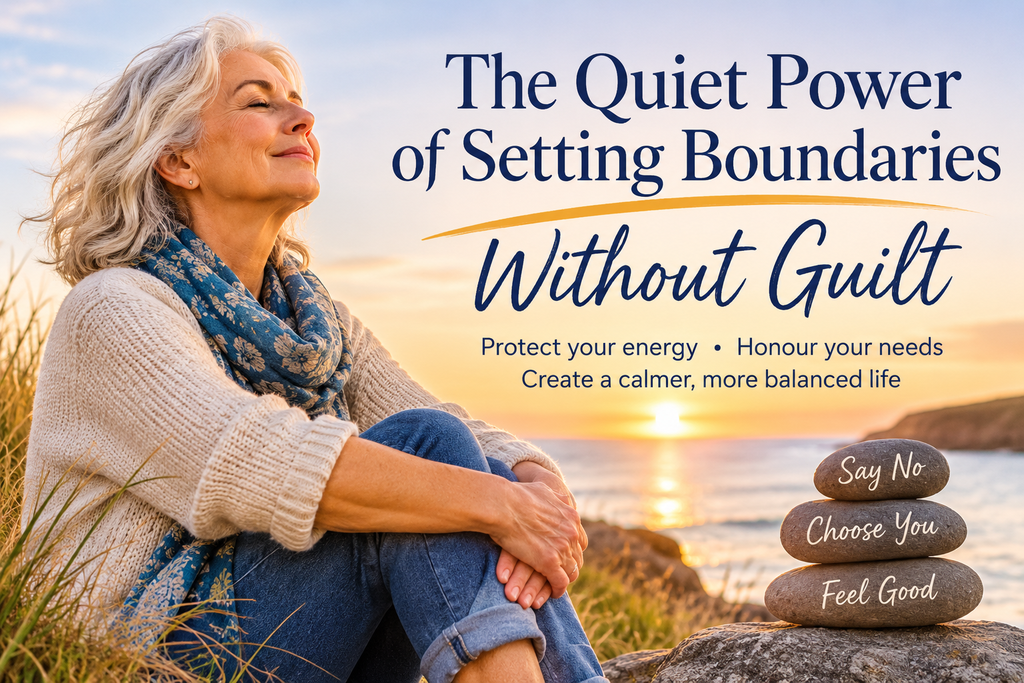
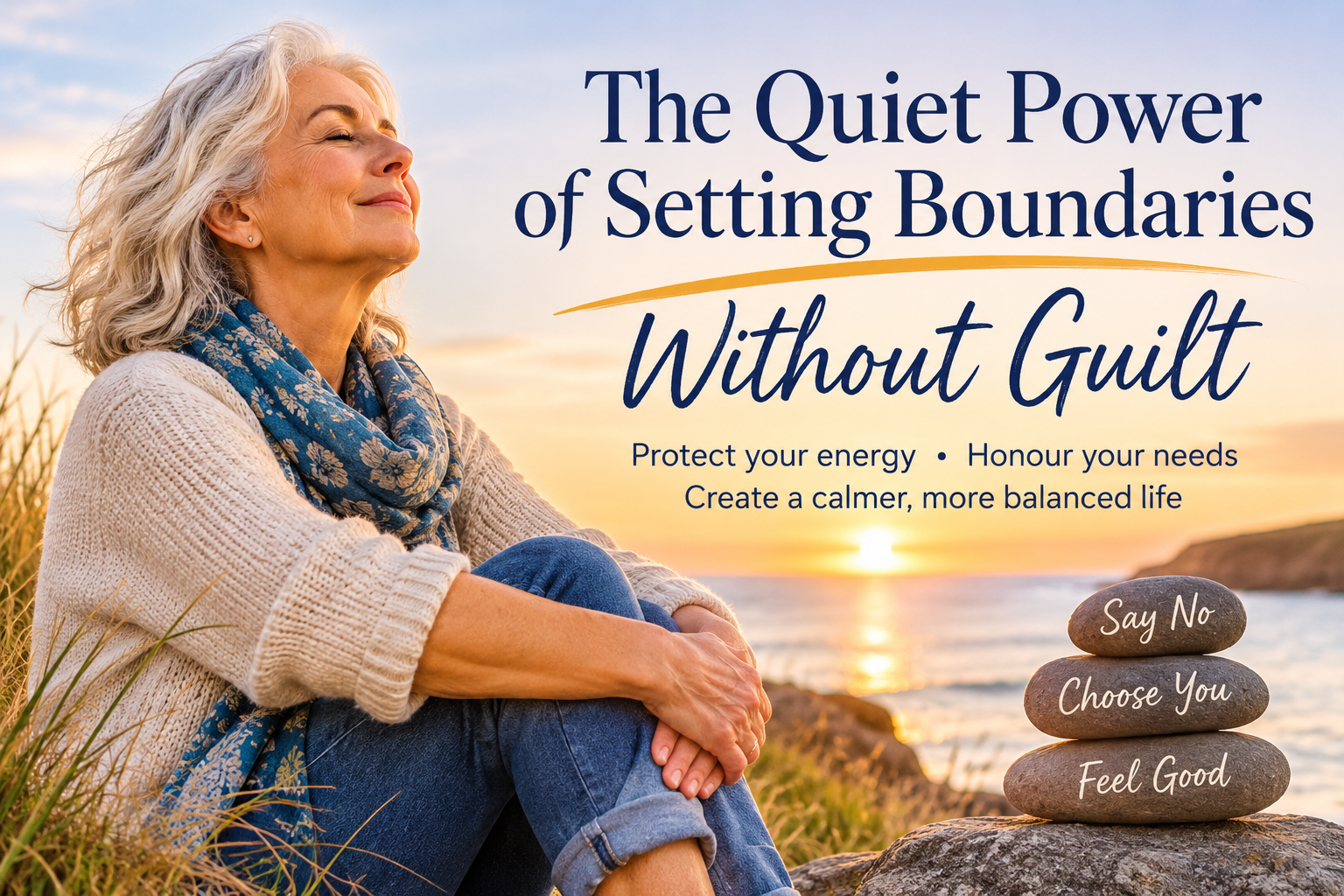
Boundaries protect your energy, especially if you live with stress, trauma or ongoing health challenges and have less to spare. They honour your needs and tell you, as well as others, that you matter too. They also create calmer, more honest relationships, because people know where they stand with you.
Often the people who are kindest to others are the ones who most need permission to be kind to themselves.
Letting go of the guilt
Guilt tends to soften when we understand where it comes from. A few gentle starting points:
Notice before you answer. Pause before saying yes. Even a breath gives you space to check in with how you really feel. “Let me get back to you” is a complete sentence.
Keep it simple. You don’t need to over-explain or justify. “I’m not able to do that this time” is enough. Long explanations often come from the fear of disapproval.
Expect discomfort, and let it pass. The first few times will feel awkward. That’s the nervous system adjusting. The feeling rises, peaks and fades, just like a wave.
Remember what you’re saying yes to. Each no makes room for something else: rest, time with people who nourish you, or simply a quieter day.
Be kind to yourself afterwards. Instead of replaying the conversation, try placing a hand on your heart and acknowledging that this took courage.
When the past keeps getting in the way
Sometimes, however much we understand boundaries intellectually, the body still reacts as if danger is near. This is often because of earlier experiences that were never fully processed.
This is where EMDR therapy can help. EMDR (Eye Movement Desensitisation and Reprocessing) helps the brain reprocess painful memories so they no longer carry the same emotional charge. Many clients find that as old experiences settle, saying no becomes less frightening and the guilt loses its grip. Boundaries start to feel natural rather than forced.
A gentle reminder
Setting boundaries isn’t selfish. It’s an act of self-respect, and in time it allows you to show up for others more fully and more honestly. You’re allowed to protect your energy. You’re allowed to honour your needs. And you’re allowed to do it without guilt.
Say no. Choose you. Feel good.
If you’d like support with boundaries, people-pleasing or the experiences behind them, I offer EMDR therapy online. Get in touch at info@trevorbeech.com to arrange a conversation.
Trevor Beech, EMDR Trauma Specialist
www.trevorbeech.com
© Trevor Beech. All rights reserved.