Spending time among trees has become more than a pleasant walk – it’s a restorative practice known as forest bathing. Originating in Japan as shinrin-yoku, it’s simply the act of slowing down, engaging the senses, and allowing the natural world to steady the nervous system. For many people living with stress, trauma, or chronic health issues, it offers a gentle and accessible way to reconnect with the body.
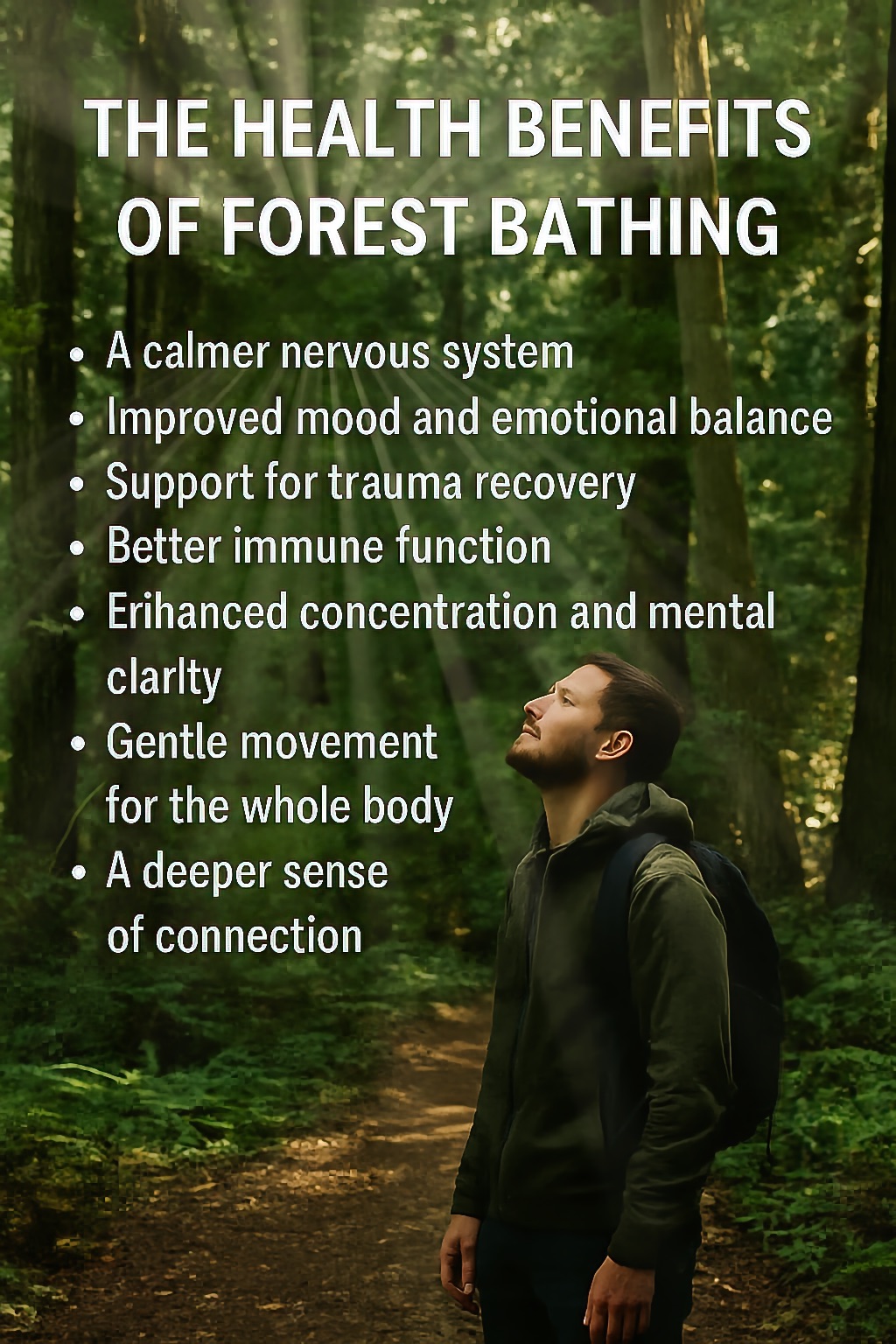
A calmer nervous system
Forest environments naturally promote a shift from the fight-or-flight response to the parasympathetic state. The quiet, soft light and repetitive natural patterns help the brain settle. Research shows reductions in cortisol, blood pressure, and heart rate after even a short time in woodland, assisting people to feel more grounded and less overwhelmed.
Improved mood and emotional balance
Trees release organic compounds called phytoncides. Breathing them in has been linked to improved mood, lower anxiety, and increased resilience. Many people notice an uplift within minutes – a sense of spaciousness in the mind and a softening in the body.
Support for trauma recovery
Nature offers a soothing, non-demanding environment. The slow pace of forest bathing encourages attunement to breath, sensation, and gentle movement, making it particularly helpful for those rebuilding a sense of safety in the body. It can complement therapeutic work by providing a calm space to reconnect without pressure.
Better immune function
Studies have found that time spent in woodland boosts natural killer cell activity, supporting the immune system. This effect can last for days, offering ongoing benefits long after the walk has ended.
Enhanced concentration and mental clarity
Natural settings give the brain a rest from constant stimulation. This “soft fascination” allows attention to replenish, supporting focus, creativity, and clearer thinking. For anyone dealing with mental fatigue or emotional overload, this can be especially valuable.
Gentle movement for the whole body
Walking on varied terrain encourages natural, low-impact movement, which can ease muscular tension and improve circulation. Combined with fresh air and steady breathing, many people notice an increase in energy after time outdoors.
A more profound sense of connection
Forest bathing invites a quiet presence – listening to birdsong, noticing the texture of bark, or watching light through leaves. This sense of connection with nature often brings a feeling of belonging and steadiness that can carry through daily life.